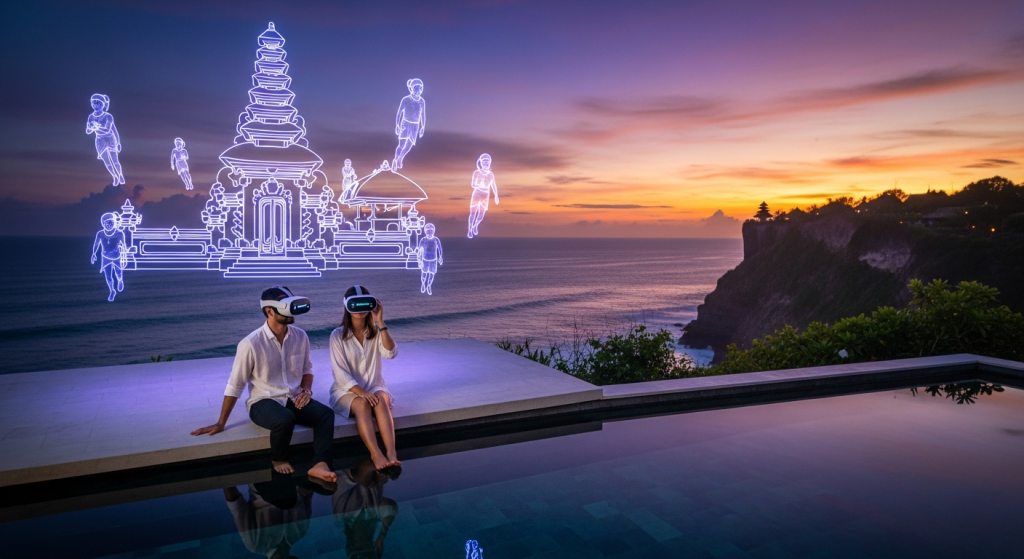
- Property developers showcase digital twin tours of villas and resorts across Pecatu and Canggu.
- Hotel groups deliver metaverse concierge services, allowing guests to explore amenities pre-arrival.
- Web3 founders establish virtual offices, participating in a global digital nomad ecosystem centered in Bali.
The tropical air, thick with frangipani and salt, shifts into a data stream. Here, Bali’s physical contours merge with its digital counterpart, a persistent virtual realm alive with possibility.
The Bali Metaverse Unveiled: A Digital Twin Reality
The Bali Metaverse materializes as a sophisticated digital twin, mirroring the island’s unique topography and cultural landmarks within an expansive virtual environment. This project utilizes advanced XR technologies, blending augmented reality (AR) and virtual reality (VR) to create an experience that transcends traditional digital interactions. Developers map real-world locations like the dramatic cliffs of Pecatu and the vibrant rice paddies surrounding Ubud into high-fidelity 3D models. The aim is not merely a static representation but an interactive, living replica where users navigate with personalized avatars. This digital twin concept extends beyond visual replication; it incorporates real-time data feeds, reflecting dynamic elements such as weather patterns or event schedules, creating a truly responsive environment.
Property developers, for instance, now offer prospective buyers detailed digital twin tours of their upcoming projects in areas like Bukit, where land values have appreciated by 15% annually since 2019. These virtual walkthroughs provide precise spatial understanding, allowing clients to modify layouts or material choices in real-time, long before physical construction begins. Investors from Singapore, a prominent Web3 hub, are particularly interested in this transparent, data-rich approach to real estate. The Garuda Wisnu Kencana Cultural Park, a significant landmark with its 121-meter tall statue, serves as an early anchor point within the metaverse, offering virtual visitors a scale model exploration. This digital realm opens new avenues for global engagement, connecting Bali’s physical charm with an accessible, interactive digital layer. The platform’s infrastructure supports thousands of concurrent users, ensuring a fluid experience for all participants.
Web3 Foundations: Powering Bali’s Digital Economy
Web3 principles form the bedrock of the Bali Metaverse, establishing a decentralized framework for ownership, governance, and interaction. Blockchain technology underpins all digital assets, from metaverse land parcels to unique NFT memberships, ensuring verifiable provenance and secure transactions. This architecture empowers users with direct control over their digital identities and possessions, moving away from centralized platforms. The implementation of smart contracts automates agreements, facilitating transparent exchanges without intermediaries. This shift aligns perfectly with Bali’s emerging status as a global digital nomad hub, particularly in areas like Canggu, where the population of remote workers has grown by 200% since 2020. Web3 founders find a fertile ground here, attracted by the collaborative spirit and the island’s progressive stance on technology adoption.
The integration of non-fungible tokens (NFTs) allows for the tokenization of diverse assets, from virtual art galleries showcasing local Balinese artists to exclusive access passes for metaverse events. These NFTs are not just collectibles; they function as utility tokens, granting specific rights or privileges within the digital ecosystem. For example, an NFT membership might provide preferential rates on virtual property, access to private avatar clubs, or even discounts on real-world Bali experiences. Singapore, recognized globally as a leading Web3 hub, plays a crucial role in this ecosystem, providing regulatory clarity and a robust financial infrastructure that supports these innovations. The Monetary Authority of Singapore (MAS) has been proactive in developing a framework for digital assets, fostering confidence among international investors. This symbiotic relationship between Bali’s creative energy and Singapore’s financial acumen accelerates the development of a resilient digital economy.
Redefining Tourism: Immersive Experiences and Concierge Services
The Bali Metaverse transforms traditional tourism models, offering immersive experiences that extend Bali’s reach to a global audience. Through XR technologies, virtual tourism explorers can navigate iconic locations such as Tanah Lot temple or the terraced rice fields of Jatiluwih, a UNESCO World Heritage site, with an unprecedented level of detail. These virtual tours are not passive videos; they are interactive environments where avatars can move, interact with digital representations of local guides, and even participate in virtual ceremonies. Hotel groups leverage this technology to offer metaverse concierge services, allowing prospective guests to virtually tour properties like the Mulia Resort in Nusa Dua, selecting rooms and exploring amenities before physical arrival. This pre-arrival immersion enhances guest satisfaction and reduces booking uncertainties.
MICE delegations benefit significantly from this immersive event technology. Companies can host virtual conferences, product launches, or team-building activities within custom-built digital venues that mirror Bali’s convention centers. Imagine a global blockchain summit held within a digital twin of the Bali International Convention Centre, complete with interactive booths and networking zones for avatars. This reduces travel costs and environmental impact, expanding accessibility for participants worldwide. Ubud, known for its creative and tech communities, serves as a hub for developing these advanced virtual experiences, drawing talent from across Southeast Asia. The local government supports these initiatives, recognizing the potential for sustainable tourism growth. Since its inception, the platform has hosted over 50 virtual events, drawing an average of 5,000 attendees per major conference. This digital extension complements physical tourism, rather than replacing it, fostering a deeper connection with the island’s culture and offerings.
Real Estate in the Metaverse: New Frontiers for Developers
Property developers find a transformative tool in the Bali Metaverse, pushing the boundaries of real estate marketing and sales. The creation of digital twin tours allows developers to showcase villas, resorts, and commercial properties across Bali with unparalleled realism and accessibility. From the bustling streets of Kuta to the tranquil beaches of Seminyak, every architectural detail and landscape feature is meticulously replicated. These virtual models permit potential buyers to customize interiors, experiment with different design schemes, and even place virtual furniture, providing a comprehensive understanding of their future investment. This transparency accelerates decision-making, reducing the need for multiple physical visits, particularly for international buyers. The average time from initial inquiry to virtual property viewing has decreased by 40% since the platform’s launch.
The concept of digital land ownership within the metaverse opens entirely new investment opportunities. Developers can acquire and develop virtual plots, creating digital extensions of their physical projects or entirely new virtual communities. These digital assets, secured by NFTs, can be bought, sold, and traded, creating a dynamic secondary market. Asset tokenization extends beyond land, encompassing fractional ownership of physical properties, making high-value real estate more accessible to a broader investor base. This model attracts both traditional real estate investors seeking diversified portfolios and Web3 enthusiasts exploring new asset classes. Bukit Pecatu, with its ongoing development of luxury resorts, is a prime area for this digital twin integration, allowing investors to visualize future growth. The platform records an average transaction volume of 100 ETH per month for digital real estate assets, demonstrating robust market activity. Find out more about how digital twins are changing property here.
Community and Culture: Avatar Life and NFT Membership
Life within the Bali Metaverse thrives on community interaction and cultural exchange, facilitated by personalized avatars and exclusive NFT memberships. Users create digital representations of themselves, navigating virtual spaces and engaging with others in real-time. These avatars become extensions of identity, allowing for creative expression and social connection regardless of physical location. Digital plazas and social hubs replicate the communal spirit of traditional Balinese banjars, fostering a sense of belonging among global participants. Virtual events, such as Gamelan performances or traditional Balinese dance showcases, are regularly hosted, allowing cultural practitioners to share their artistry with a worldwide audience. These events often incorporate interactive elements, where avatars can learn basic dance moves or play virtual instruments.
NFT memberships serve as keys to exclusive experiences and communities within this digital realm. Owning a specific NFT might grant access to private virtual clubs, invite-only metaverse gatherings, or even provide governance rights in certain digital districts. These memberships also extend utility to the physical world, offering discounts at partner hotels, restaurants, or local businesses in Bali. This fusion of digital and physical benefits creates a powerful incentive for engagement and loyalty. The platform prioritizes the integration of local Balinese wisdom and sustainable practices into its digital design, ensuring the metaverse reflects the island’s values. For instance, digital art installations often draw inspiration from Balinese mythology and environmental themes. The community grows, with over 50,000 registered avatars actively participating in weekly events. This vibrant digital ecosystem offers a modern interpretation of Bali’s rich heritage, connecting people through technology and shared experiences.
The Singapore Connection: A Global Web3 Hub
Singapore serves as a pivotal international Web3 headquarters for the Bali Metaverse, providing a strategic bridge between Southeast Asia and global technology markets. Its reputation as a leading financial hub, combined with a progressive regulatory environment, makes it an ideal base for managing international operations, investment flows, and advanced technological development. The Monetary Authority of Singapore (MAS) has actively fostered innovation in digital assets, issuing clear guidelines and licenses that provide confidence for Web3 founders and investors. This regulatory clarity is a significant advantage, attracting talent and capital that directly benefits the Bali project. Prominent tech parks like One-North host numerous blockchain and AI companies, creating a fertile ground for collaboration and talent acquisition. Singapore’s robust infrastructure, including its high-speed fiber optic networks, supports the demanding data requirements of a complex metaverse.
This strategic dual presence allows for optimizing operations: Bali provides the cultural inspiration, creative talent, and a growing digital nomad ecosystem, while Singapore offers institutional backing, global connectivity, and a mature Web3 ecosystem. International MICE delegations often begin their exploration in Singapore, a global convention city, before extending their immersive tech tests to Bali. The flow of investment from Singapore-based venture capital firms into Bali’s Web3 projects has increased by 30% over the last year, fueling innovation in areas like digital twin real estate and metaverse concierge services. This partnership leverages the strengths of both locations, positioning the Bali Metaverse as a leader in the intersection of luxury tourism, Web3, and immersive technology. The project maintains a core development team of 75 engineers and designers, split between the two locations, ensuring continuous innovation and global reach. Learn more about Singapore’s role in global Web3 innovation on Wikipedia.
Experience the next frontier of Bali. Explore digital twin real estate, engage with immersive XR tourism, and connect with a global Web3 community. Visit balimetaverse.com to discover how Bali’s physical allure merges with limitless digital potential.